This is a paid partner contribution. Commercial relationships are disclosed so readers can distinguish sponsored content from editorial guides.
A storefront or office entrance serves as the first point of contact for anyone walking or driving past your location. Deciding how to present your brand to the street involves more than picking a color or a font; it requires a clear understanding of your physical environment and your specific goals for visibility. Before you sit down to discuss options, gathering your own observations can help streamline the conversation.
Assessing your physical space
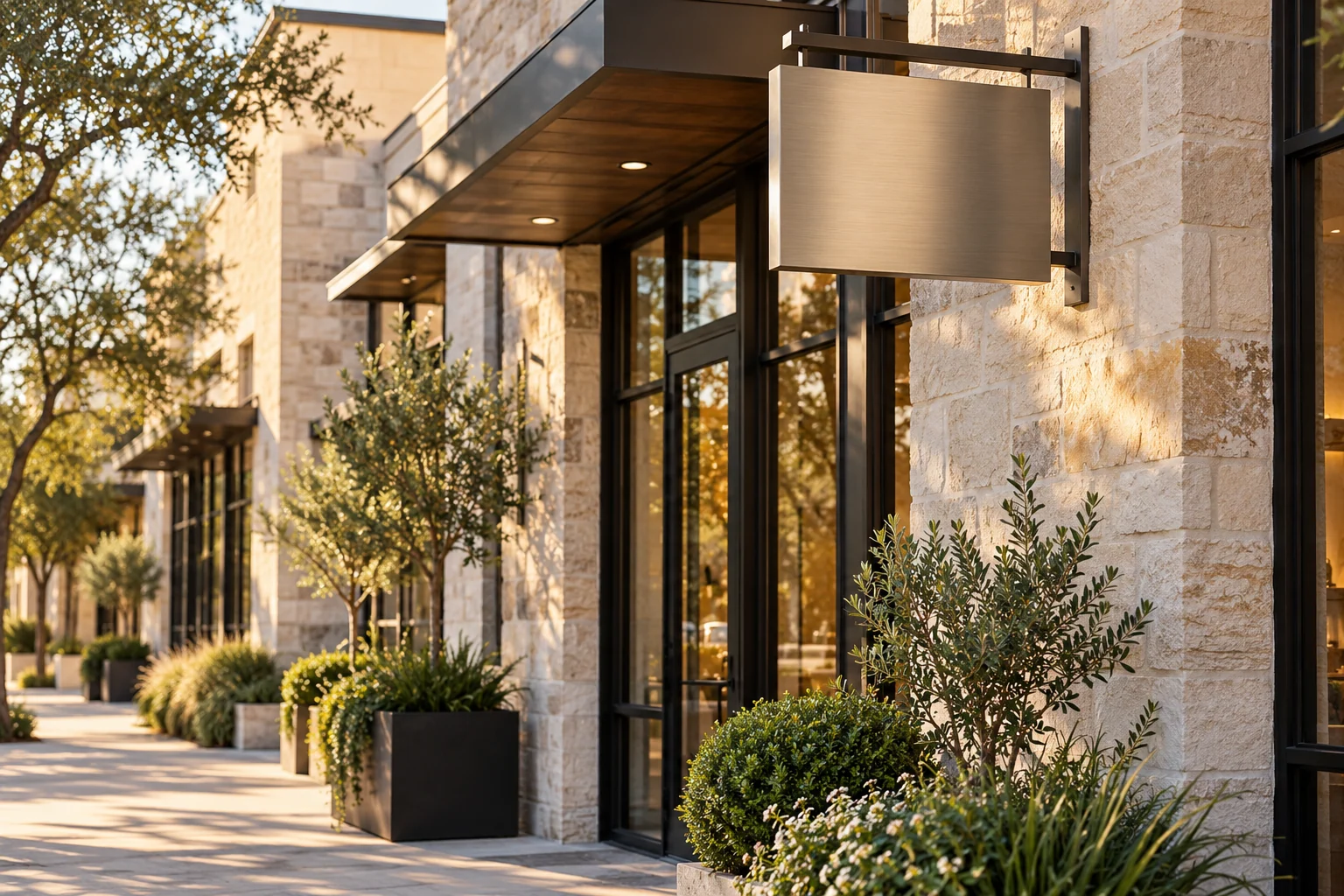
Every location presents its own set of unique conditions. A sign that looks striking on a flat, shaded wall might behave differently when placed near a bright window or under a heavy overhang. To prepare, walk the perimeter of your building at different times of the day. Note where the sun hits the facade and where shadows fall. Consider the distance from the curb and the speed at which traffic moves past your door.
For example, if you are looking at exterior signs for shops and offices in Southeast Dallas, you might notice that a small, delicate sign is easy to read while standing on the sidewalk but disappears entirely to a driver passing by in a vehicle. This observation allows you to discuss scale and placement with more precision. You should also take note of any existing structures, such as light fixtures or architectural trim, that might influence where a new installation can go.
Defining your visual objectives
Before meeting a specialist, clarify what you want the sign to communicate. Are you aiming for high-impact visibility from a distance, or are you looking for a subtle, sophisticated accent for pedestrians? Having a set of specific goals helps move the conversation from vague ideas to actionable designs. It is helpful to compile a list of your preferred colors, preferred materials, and the exact text you want displayed.
Think about the tradeoff between different styles. A brightly lit sign might grab attention in the evening but could feel overwhelming in a quiet, professional building during the day. Similarly, certain materials may offer a specific texture but could react differently to the Texas heat and sun exposure. Preparing these preferences in advance helps you navigate these choices more effectively.
Questions for your consultation
A productive meeting relies on the quality of the information exchanged. Rather than assuming a specific design will work, ask questions that address your specific site and needs. You might ask how a particular material handles local weather conditions or how the proposed lighting will affect the surrounding area. Ask about the installation process and what kind of surface preparation might be necessary for your specific building material.
If you are unsure where to begin the process, you can contact FASTSIGNS Fair Park to start the conversation. Bringing your measurements, your photos of the site, and your list of questions will ensure that the resulting design is grounded in the reality of your location.


