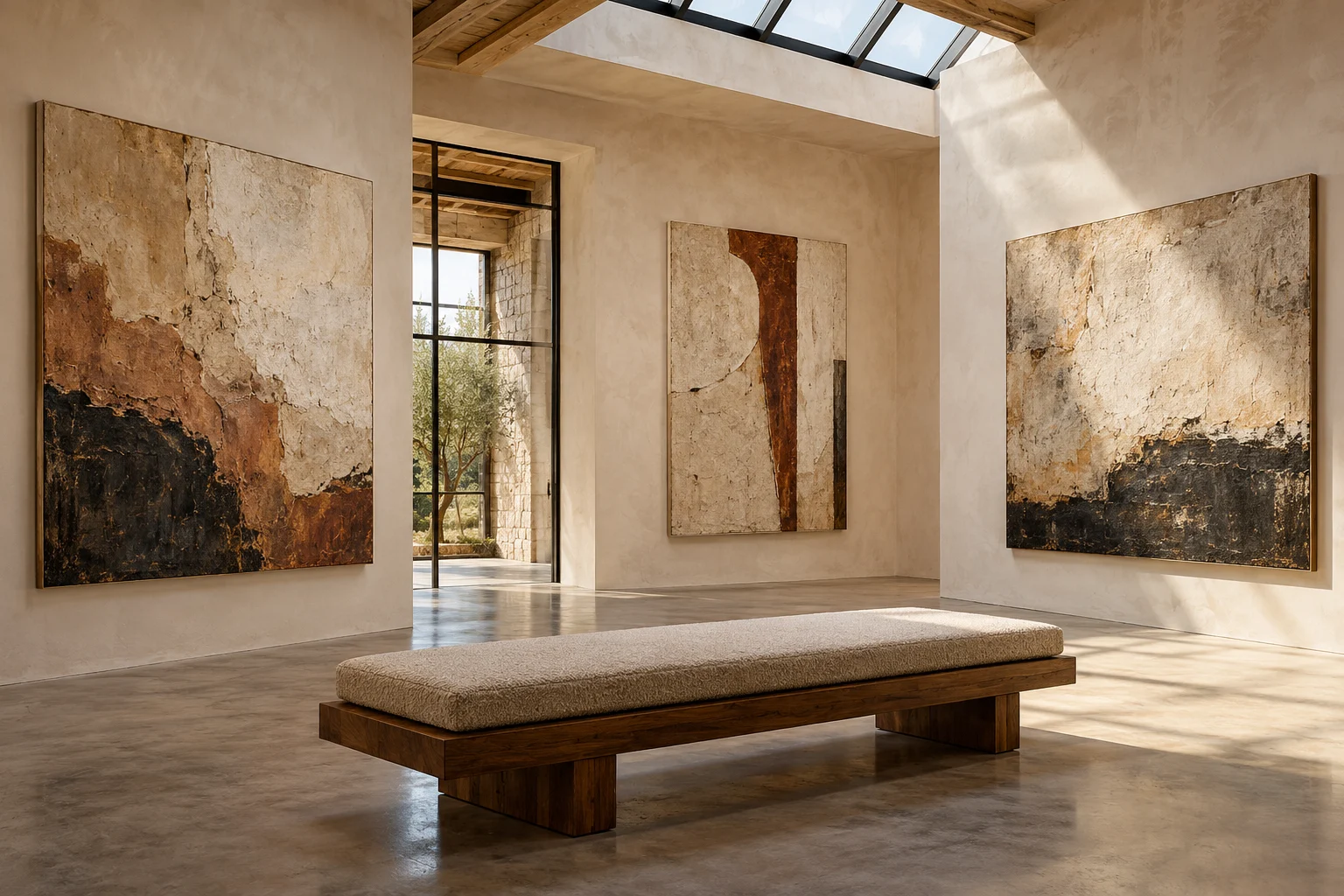
A heavy canvas hangs against a white wall, dominated by thick, jagged strokes of ochre and deep violet. To one person, the texture might feel restless, almost aggressive. To another, those same ridges of paint might suggest the rugged terrain of a canyon at dusk. These initial reactions—the physical pull of a color or the way a shape makes you feel uneasy or calm—are the most honest tools you possess when entering a gallery.
The Gap Between Feeling and Fact
It is easy to fall into the trap of believing that your personal response is somehow incorrect if it does not align with the artist's intent. We often assume that if a piece is titled Solitude, we must feel a sense of loneliness to be 'reading' it properly. However, there is a meaningful tradeoff between your subjective experience and the creator’s stated explanation. Your observation is a record of your own perspective; the artist’s note is simply a record of theirs.
For example, if you find yourself standing before a sculpture made of twisted copper wire, you might find the metallic sheen distracting or even beautiful. If the plaque nearby explains that the piece represents the fragility of human connection, you might feel a disconnect between the 'beauty' you see and the 'fragility' the artist intended. This tension is not a failure of understanding. It is an invitation to hold two different truths at once: what the object is, and what it does to you.
Navigating the Gallery Space
When you feel the urge to bridge the gap between your eyes and the artist's mind, you can do so through targeted inquiry rather than guesswork. Instead of searching for a hidden meaning, look for the mechanics of the work. Notice how the light hits a surface or how the scale of a piece changes your relationship to the room. These are concrete observations that ground your experience in the physical world.
If you are attending a guided tour or an opening reception where the artist or a curator is present, you might find it helpful to move beyond the question of "What does this mean?" Try asking more specific questions to understand the process behind the perception. You could ask:
- How did the choice of materials influence the mood you wanted to create?
- What specific elements of the composition were intended to draw the viewer's eye first?
- In what ways does the scale of this work change how it interacts with the surrounding space?
Making the First Move
Entering an art conversation is less about arriving at a correct conclusion and more about refining your ability to notice. If a particular work leaves you puzzled or even annoyed, treat that irritation as a valid data point. The goal is not to master a vocabulary of aesthetics, but to become more comfortable with the dialogue between your senses and the objects before you. Start by simply naming what you see, and let the interpretation follow at its own pace.